

海角社区鈥檚 History
海角社区 is celebrating over 60 years of providing services for individuals with intellectual/developmental disabilities! Recently, we looked back on the previous six decades and reflected on how we became an environment of love, care, and hope for so many.
INSPIRATION...
Let us set the scene for 海角社区鈥檚 founding 鈥� mother Rachel Keith is forging her own path when it comes to raising her son Ronnie, who was born with Down syndrome. Rachel believes in a radical idea: that her son does not need to be institutionalized or hidden away from society. With this in mind, Rachel and a small coalition of like-minded mothers begin an informal school for children with Down syndrome in the comfort of Rachel鈥檚 home.
By 1961, the culture and societal norms finally start to catch up to Rachel鈥檚 vision. With the help of the Pasadena Civitan Club, an old storefront property on 海角社区 Street is bought for the mothers to create an official school for students with Down syndrome. Incorporated as a non-profit in 1961, 海角社区 Esperanza is opened for business.

TRANSFORMATION...
海角社区鈥檚 small, homegrown school had proven to be not only successful, but sustainable. Its first generation of students were graduating, but there was not yet a place for these new young adults to go. If 海角社区 wanted to successfully transition its students into members of their greater community, it would have to be proactive.
By the mid-1970鈥檚, 海角社区 had purchased three residential homes to provide assisted living services for special needs adults, giving them a combination of independence and support. When the school graduates struggled to find employment, a workshop and thrift store were established to provide job training. Before the decade was out, 海角社区 had expanded beyond just Pasadena and purchased 鈥淭he Ranch鈥� in Ventura County, which was used as an adult day program, job training site and 2 residences.

EXPANSION...
After a decade and a half of program expansions, changes from both the community and within 海角社区 caused a funding shortage. 海角社区 needed to adapt and needed to do it fast. Incoming Executive Director Dottie Nelson who took charge of the organization in the mid-1990s quickly restructured 海角社区鈥檚 programs, streamlining services to save money. Additionally, 海角社区 applied for and received a grant from the Department of Housing and Urban Development to renovate and sustain the homes in the Residential Services Program.
Thanks to leadership鈥檚 thoughtful actions, in 1993, 海角社区 is the first to open a classroom for children with Autism, a much-needed community service. 海角社区 continued to expand its adult programs, adding the Dimension and Adult Day Programs and partnering with businesses in the community to broaden job opportunities for program participants.

PROGRESSION.
Over its first 50 years, 海角社区 had been providing services out of a hodgepodge of repurposed buildings. In 2014, the 海角社区 Board voted to start a Capital Campaign that would build a campus that matched the level of care that 海角社区 provided to individuals with intellectual/ developmental disabilities. The three-part capital campaign began with a ground breaking in 2017 for the construction of elementary and middle school classrooms. The new facilities, opened for instruction in 2018, were constructed with 海角社区 students in mind and contained state-of-the-art technology, kitchens to teach life skills, and more!
In 2019 海角社区 launched the next phase of the campaign, Phase 2, which included the construction of an Occupational Therapy Clinic, the Physical Education and Therapeutic Center, and three additional school classrooms. Then in 2020, the COVID-19 pandemic brought with it a unique set of challenges, but 海角社区 rose to the occasion, quickly pivoting to provide virtual services. By 2022, 海角社区 was happy to be back in full swing with all programs in person.
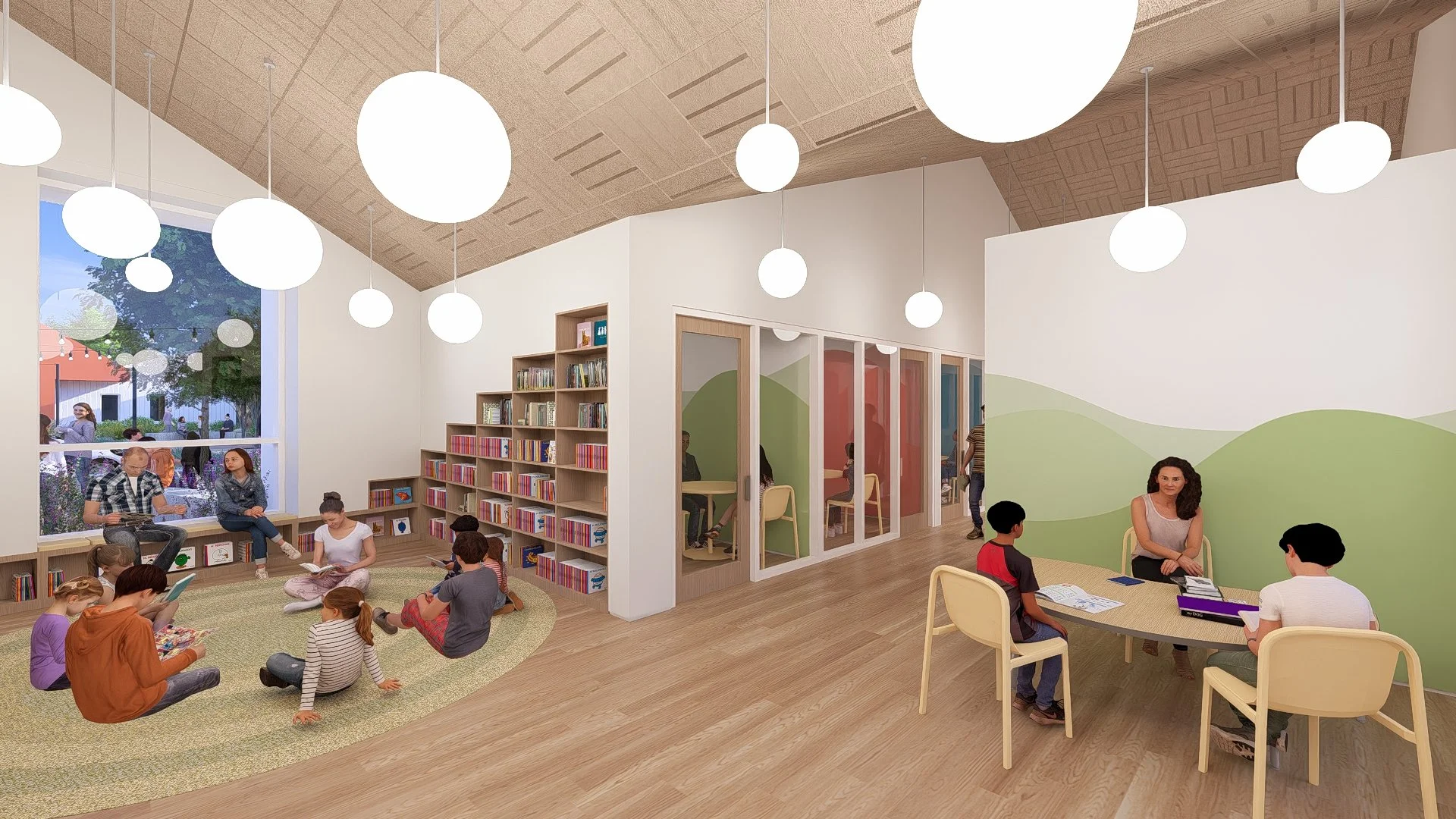
海角社区 broke ground on Phase 2 of the Capital Campaign in fall of 2022 and celebrated its grand-opening on the first day of spring in 2025. The final phase of the Capital Campaign includes a reception area, Speech & Language Center, school library, Community Integration Program area, and offices for administration and program staff.